Tile · Entry 15
Seven colours
The haft rang tile: how firing several colours at once trades the sharpness of cut mosaic for speed, economy, and a softer glow.
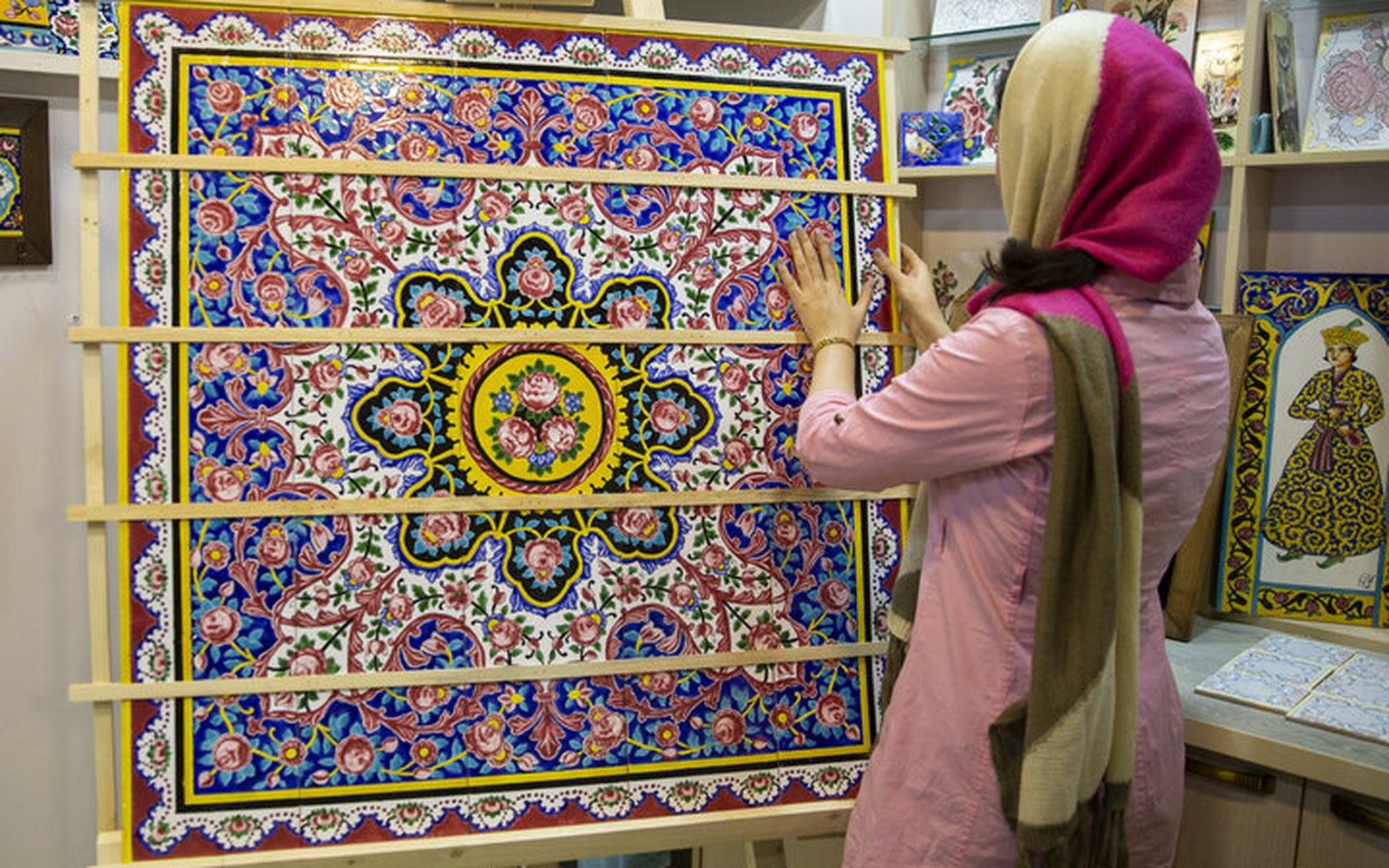
A tile that does it all at once
Haft rang means seven colours, though the name is shorthand for the technique as much as a literal count. Where cut mosaic requires each colour to be fired separately, cut to shape with a hammer and chisel, and bedded face-down into plaster one fragment at a time, the haft rang tile compresses that labour into a single square. The design is drawn onto an unfired tile, each colour separated from its neighbours by a fine ridge of manganese-black or by the inherent tension between glazes, then the whole surface fires in one kiln pass.
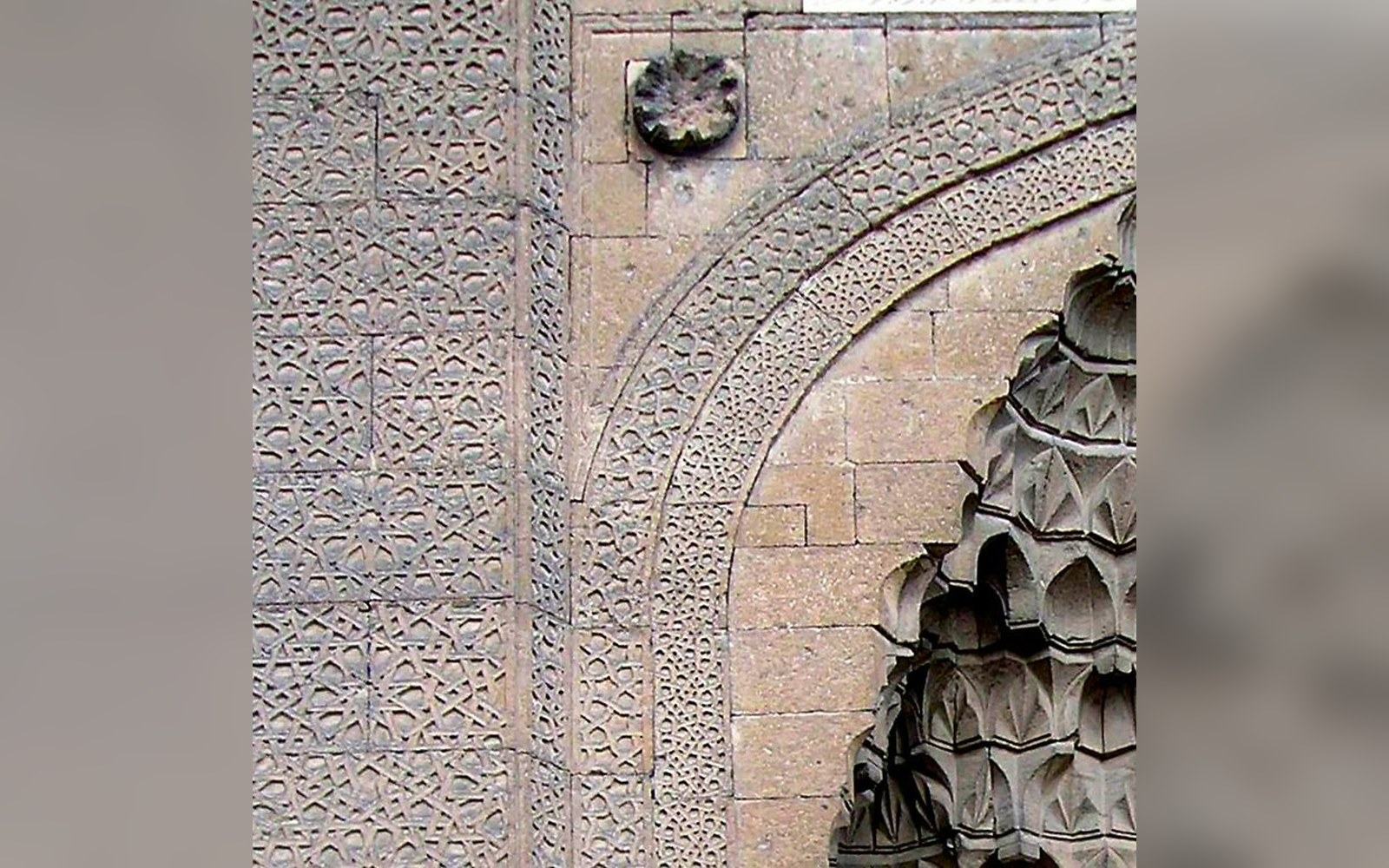
The ridge is the key structural decision. Without a physical barrier, adjacent glazes would bleed into each other during firing — colours are liquid under heat, and they move. The raised line, pressed or trailed onto the surface before the glaze is applied, acts as a dam. It is not merely decorative; it is the reason the composition holds. The lines are inevitably thicker than the hairline gaps between tesserae in cut work, and this is where the two techniques part company aesthetically: haft rang reads from a distance as something unified and painterly, cut mosaic as something precise and lapidary.
The technique became the dominant form for exterior tiling during the Safavid period, when the volume of construction in Isfahan demanded surfaces faster than the mosaic workshops could supply. A single complex panel in cut mosaic might occupy a craftsman for weeks; the equivalent in haft rang could be assembled and fired in a fraction of that time, and the square format made replacement straightforward.
The palette is typically built from cobalt blue, turquoise, white, black, yellow, green, and a warm red-brown — the seven of the name, more or less. Each pigment has its own thermal behaviour, and matching them so they mature at the same temperature without one burning out while another remains underfired is the kiln-master's particular skill, as demanding in its way as the cutter's eye for stone.
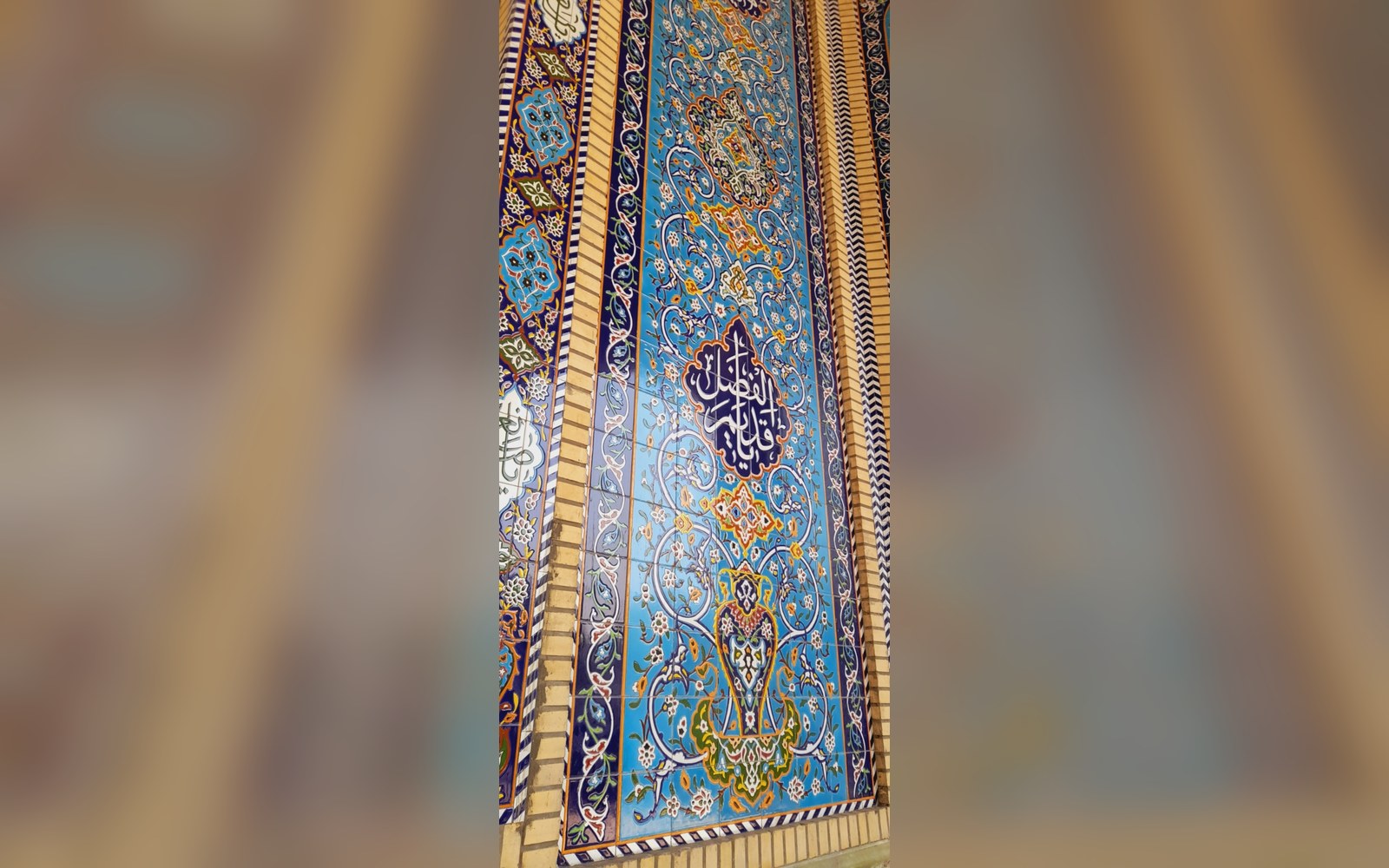
The softer edge is not a flaw. At the height of a portal arch or across a dome's drum, the slight bloom between colours reads as warmth — the geometry intact, the surface alive.