Carpet · Entry 05
The knot
Two systems for wrapping a strand of wool around two warps — and why counting knots per inch tells you less than you think.
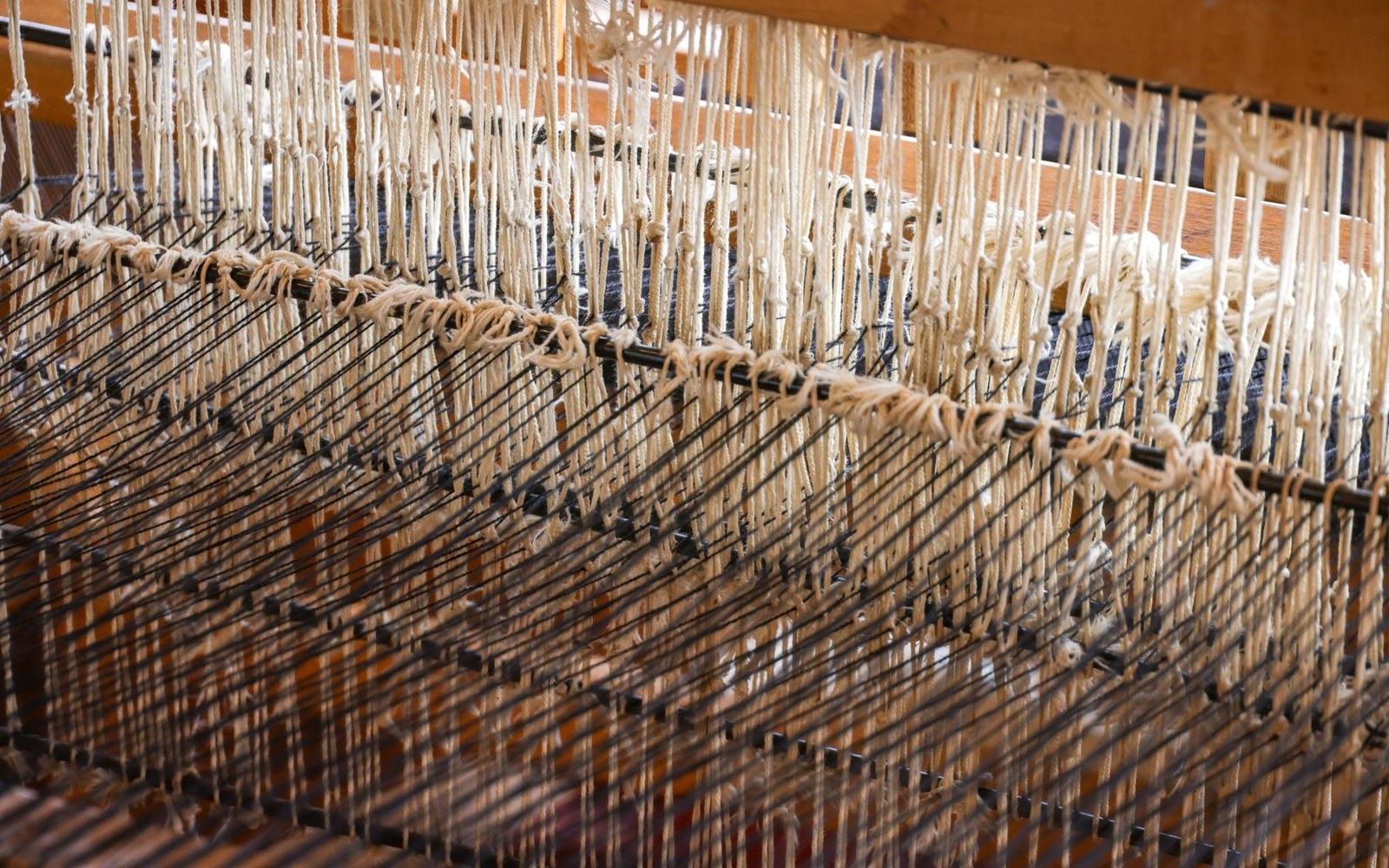
Symmetrical and asymmetrical: what the choice actually does
A hand-knotted carpet pile is built from millions of individually tied knots, each one a short length of yarn looped around a pair of warp threads and cut to leave two tufts standing. There are two fundamental ways to make that loop, and the difference between them is structural, not decorative.
The practical consequence is in pile behaviour under shearing.
The symmetrical knot — called the Ghiordes or Turkish knot — wraps the yarn fully around both warps, so that both ends emerge between the pair. Pull the two tufts and you pull against two fully enclosed warps: the knot seats firmly and tends to resist lateral displacement. The asymmetrical knot — the Senneh or Persian knot — loops around one warp entirely and only passes behind the other, with both ends emerging on the same side or on either side depending on whether it is tied open left or open right. The grip is different: the yarn is anchored more to one warp than two, which lets it be pulled to a slight angle before it locks.
The practical consequence is in pile behaviour under shearing. An asymmetrical knot, because its two ends are not perfectly equidistant from the axis of rotation, can be cut at a lower pile height before the base starts to show; it also responds more readily to depressing one end to sculpt a directional surface. This is one reason weavers in Persian-tradition workshops favour the asymmetrical knot for curvilinear designs: the pile can be inclined toward the inside of a curve during finishing, letting a drawn arc read cleanly rather than stepping. The symmetrical knot, seated squarely on both warps, produces a pile that stands more vertically and reads better in geometric patterns with strong, straight edges — which is exactly the visual vocabulary of Turkish and Caucasian weaving traditions.
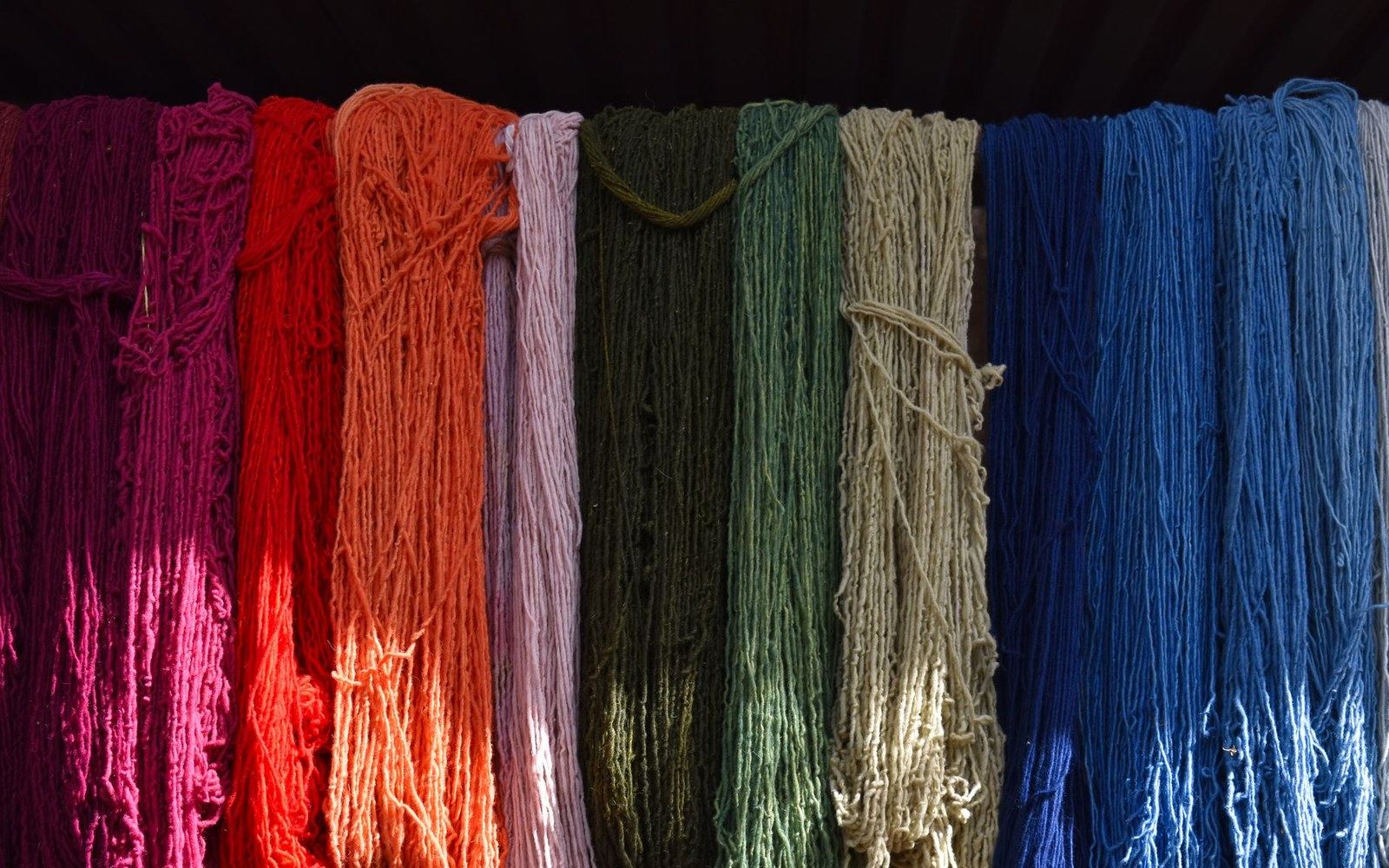
Neither knot is inherently superior. Each is correct for what it is being asked to do.
Why knot density is a rougher measure than it seems
Knot density — expressed as knots per square inch or knots per square decimetre — is the number most commonly used to grade a carpet's fineness, and it is genuinely meaningful up to a point. A higher count, all else equal, allows finer pattern resolution: more knots in a given area means more points in the grid from which a curve can be drawn. A carpet with four hundred knots per square inch can represent a curve that a carpet with eighty cannot.
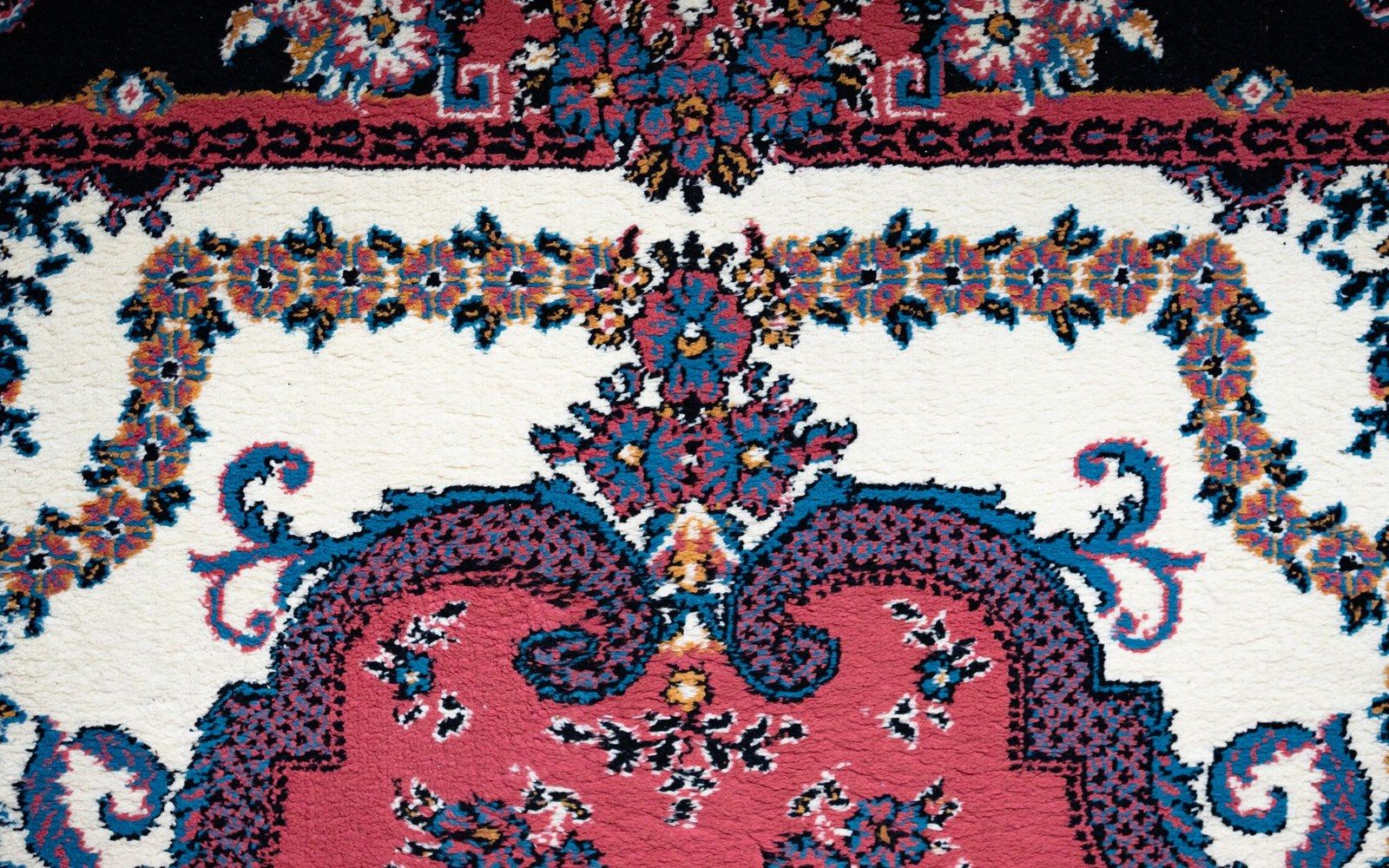
But all else is rarely equal. Knot count is a function of two independent variables: warp sett (how many warps per unit width) and weft spacing (how many weft passes per unit length). Either can be manipulated without changing the yarn quality, the dye, the design intelligence or the tension consistency that actually make a carpet wear well and age gracefully. A workshop can inflate apparent density by depressing alternate warps — pushing every second warp behind the plane of the others — so that two rows of knots share the space one row previously occupied. The resulting count is real, but the structure is now asymmetric in tension, and the carpet may be less stable than a lower-count piece with all warps in the same plane.
Pile height interacts with knot count in ways that further complicate the metric. A high pile on a moderately knotted foundation obscures a degree of design resolution that a low, sheared pile on the same foundation would reveal. Conversely, the finest Tabriz workshop carpets and the great Safavid-period pieces attributed to court manufactories in Kashan and Isfahan achieve their resolution not by pushing any single variable to an extreme but by holding warp sett, weft packing, yarn twist, pile height and tension simultaneously within very narrow tolerances. The knot count in such a piece is high, but it is high as a consequence of overall discipline, not as an end in itself.
The knot, in the end, is a unit of structure. Count the units if you like — but the quality is in what holds them together: the consistency of the loom and warp setup, the yarn preparation, the hand behind the hook. A carpet is not a spreadsheet.