Earth · Entry 24
Domes and squinches
The corner is the problem. A circle sits on a square only if something fills the gap — and in Iran, that something was the squinch.
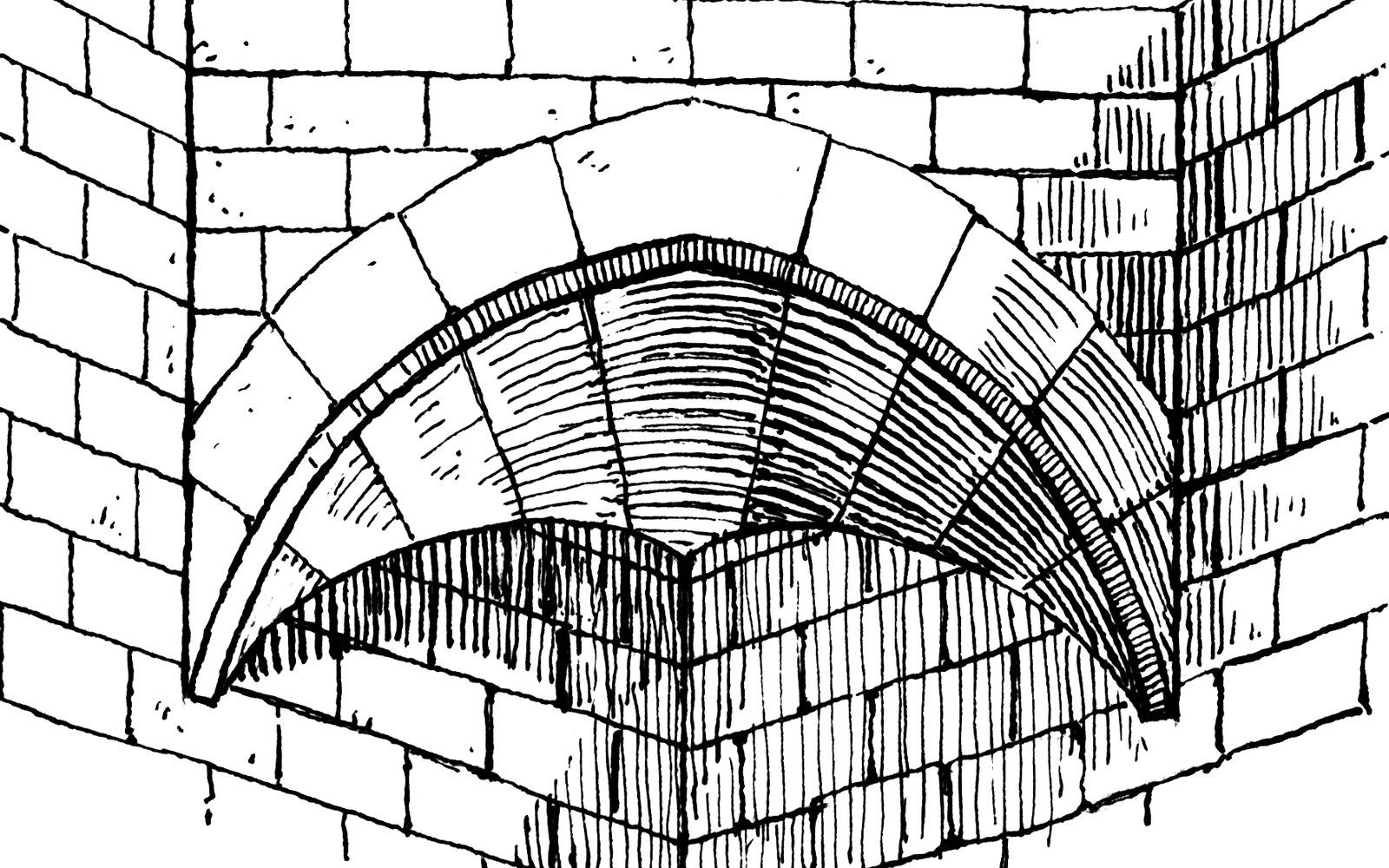
Turning a square into a circle
A dome wants a continuous circular ring to sit on. A square room gives you four walls and four corners, and the corners are the gap. The solution is to fill each corner with a small bridging arch — the squinch — set diagonally across it, converting the square footprint into an octagon, and then into a sixteen-sided polygon that is close enough to a circle to carry the dome's base ring without drama.
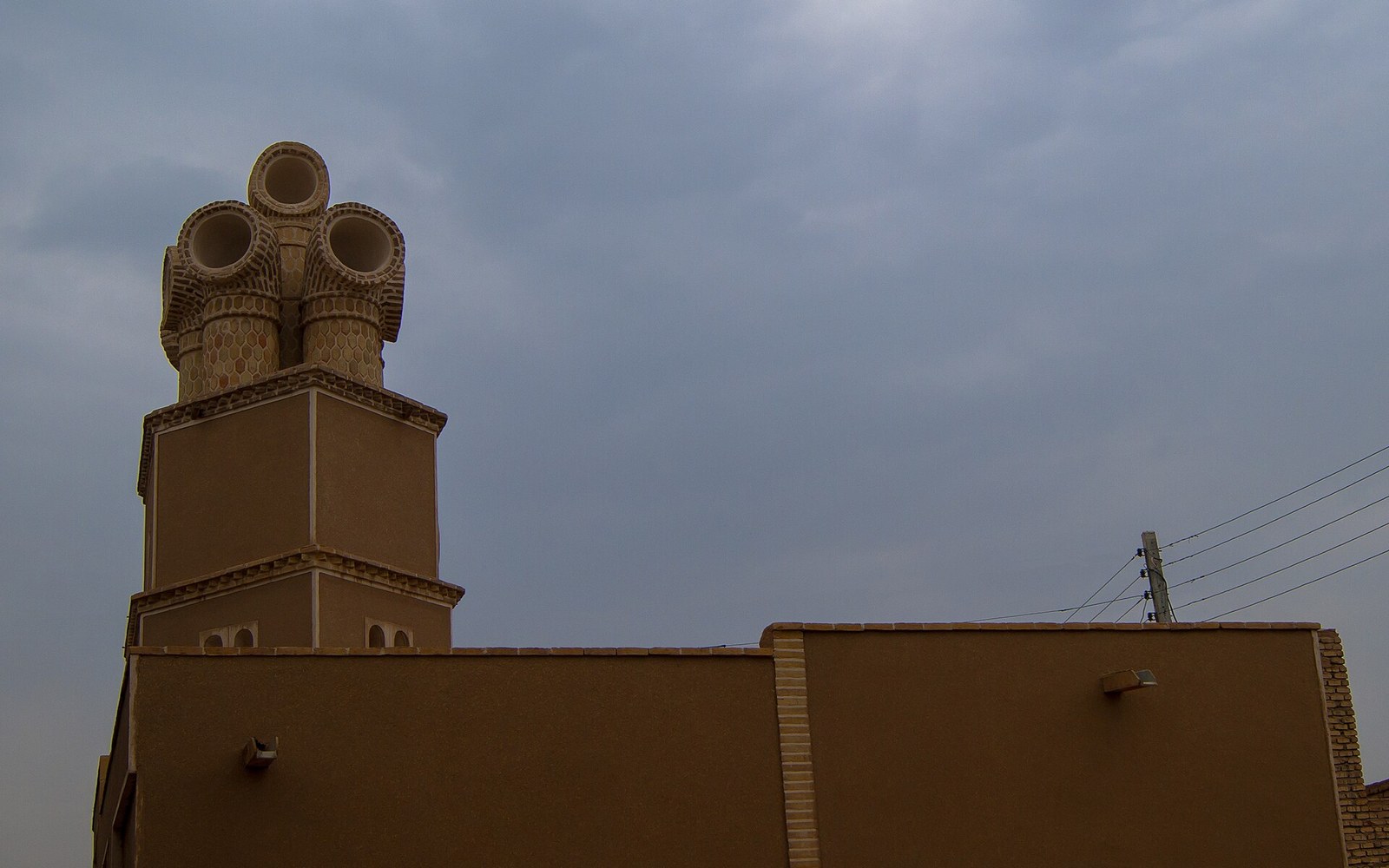
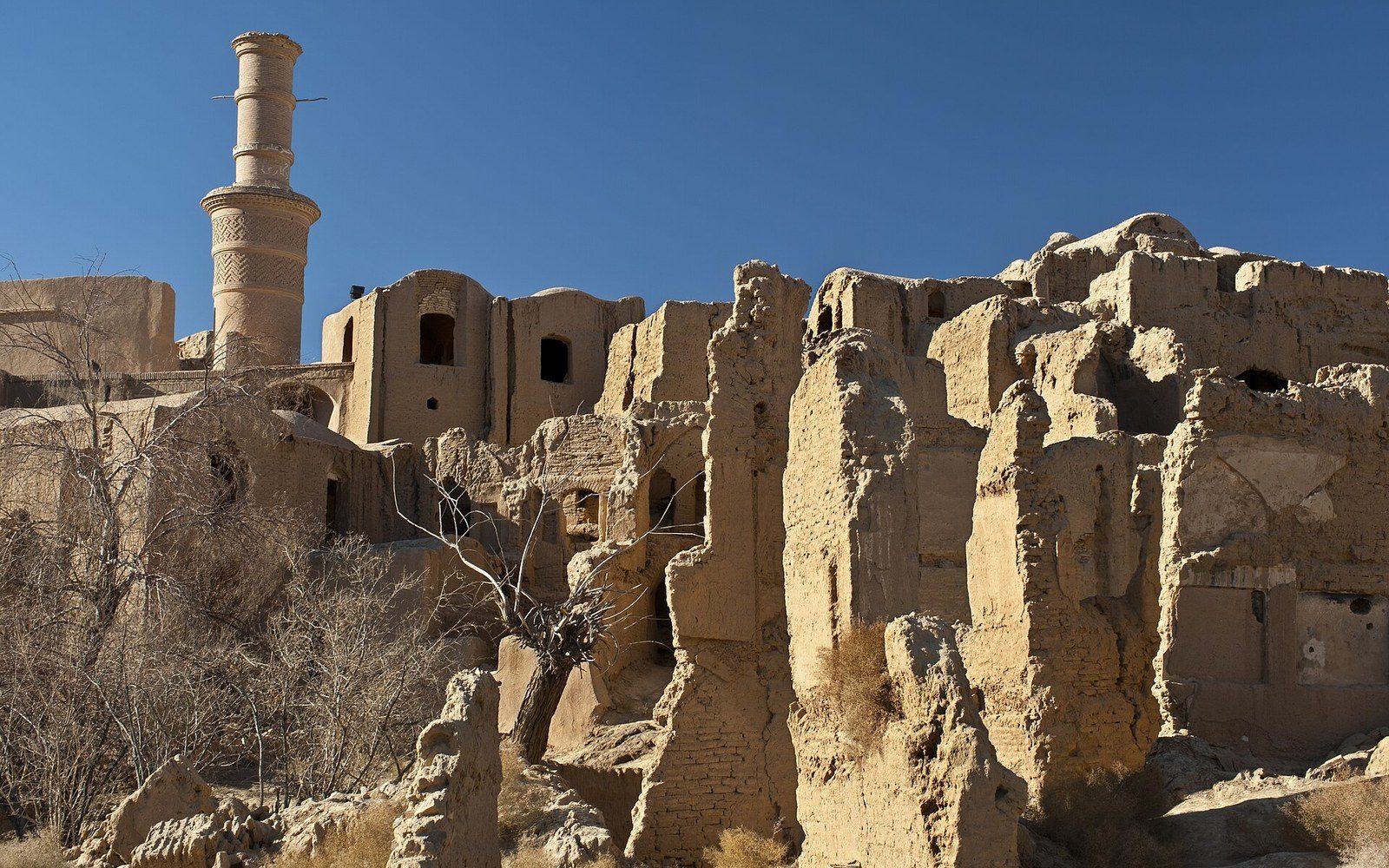
This logic is ancient in Iran. The fire temples of the Sasanian period — structures like those at Firuzabad and Sarvestan, built before the seventh century — already use the squinch in plain masonry. The principle is structural, not decorative: the squinch redirects load from the dome's circumference into the corners of the wall below, where the masonry is thickest and strongest.
The pendentive, the curved triangular surface that the Byzantine and later Western traditions preferred, solves the same problem differently — it is a slice of a larger sphere, smoothly continuous from square to circle. It is an elegant geometric answer, but it requires either confident stonecutting or very thin brick work. The squinch is simpler to build in mud brick and fired brick alike, and it is far easier to repair. In a building tradition that worked primarily in adobe and fired brick rather than cut stone, the squinch was the natural choice.
It is an elegant geometric answer, but it requires either confident stonecutting or very thin brick work.
Over time, the squinch grew elaborate. By the Seljuk period, eleventh and twelfth centuries, builders were nesting squinch arches inside one another, adding subsidiary cells between them, and beginning the transition toward the full muqarnas system — stacked rows of small cells that dissolve the transition zone into pure geometry. The structural function never changed; the visual result became one of the most distinctive surfaces in Iranian architecture. The corner problem remained the engine. Everything else was a consequence of solving it well.