Carpet · Entry 08
Loom and warp
The loom sets the ceiling — on size, on shape, on what a weaver can reach without moving.
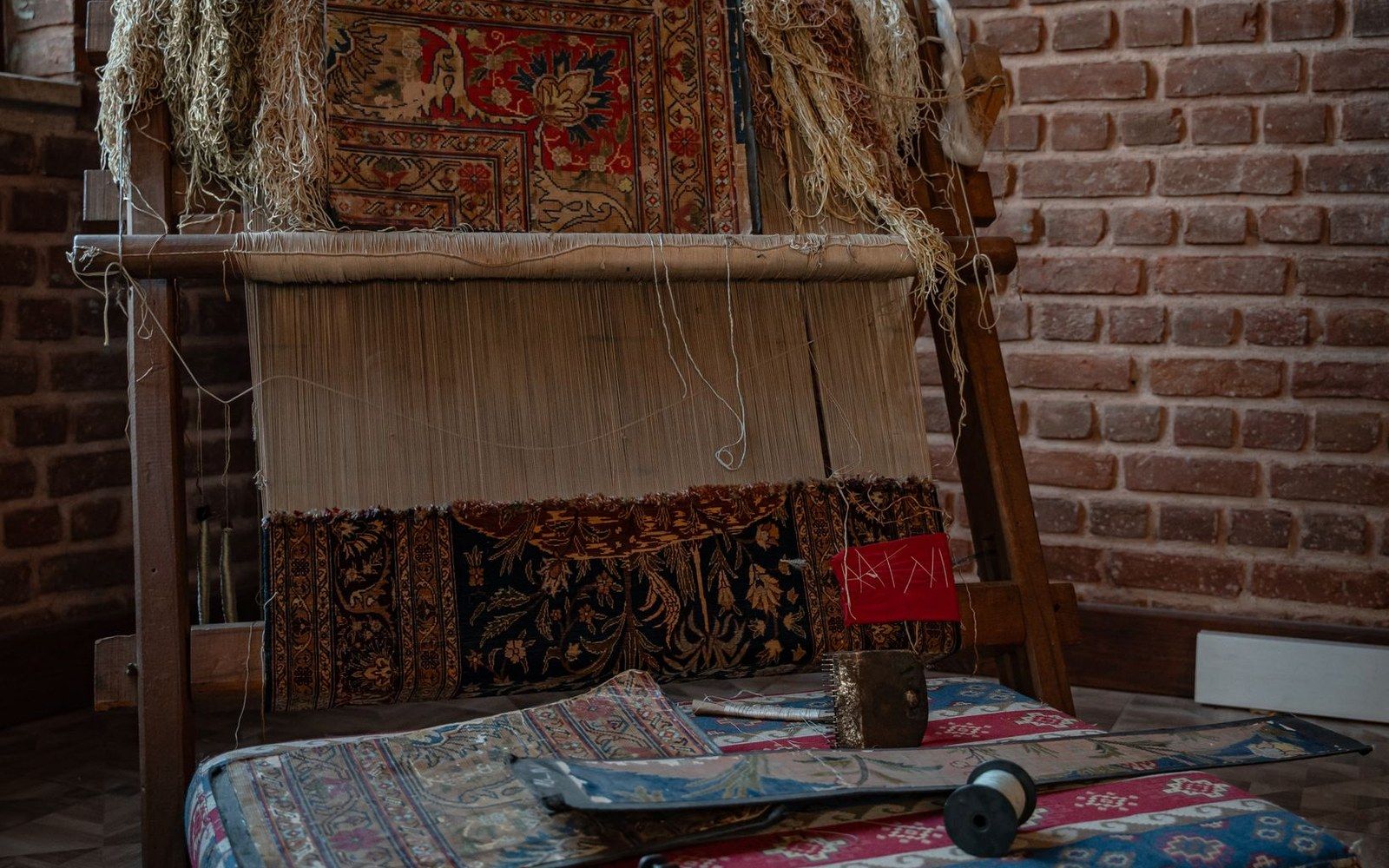
Two frames, two geometries
A village loom is a horizontal frame pegged into the ground. The warp — the foundation threads running lengthwise through the pile — lies flat, and the weaver sits at one end, working away from herself across the width and up toward the far beam. The practical consequence is immediate: she can make a carpet as long as she likes, unrolling finished work under her as she progresses, but the width is fixed by the span she can reach from side to side without standing. Village rugs from the nomadic and semi-nomadic traditions of Fars province, the Zagros highlands, and Khorasan are almost always narrower than they are long — a proportion the loom enforces rather than the weaver chooses.

The rolling solution, refined in the Tabriz workshops over several centuries, lets the completed pile wind down and out of the way while new warp feeds from above.
A town loom — the kind standard in the workshops of Tabriz, Kashan, and Isfahan — stands vertical. The warp is strung between an upper and lower beam set in a rigid frame, and the weaver sits on a plank bench that can be raised as the work climbs. Because two weavers can work side by side on a wide vertical frame, and because the frame is fixed to the walls of a purpose-built room, widths of four metres and more are achievable without any physical awkwardness. What the vertical loom surrenders is length. The total warp that can be strung is determined by the distance between the two beams; to make a longer carpet you must either allow the warp to roll around the lower beam as work advances — the Tabriz rolling or Tabriz-type loom — or accept a ceiling set by the frame itself.
The rolling solution, refined in the Tabriz workshops over several centuries, lets the completed pile wind down and out of the way while new warp feeds from above. Length is no longer dictated by the room height. This is why the great palace-scale carpets — runners of ten metres or more, room-fillers of palatial proportions — came predominantly from urban workshops rather than village tents. The infrastructure of the city made them possible.
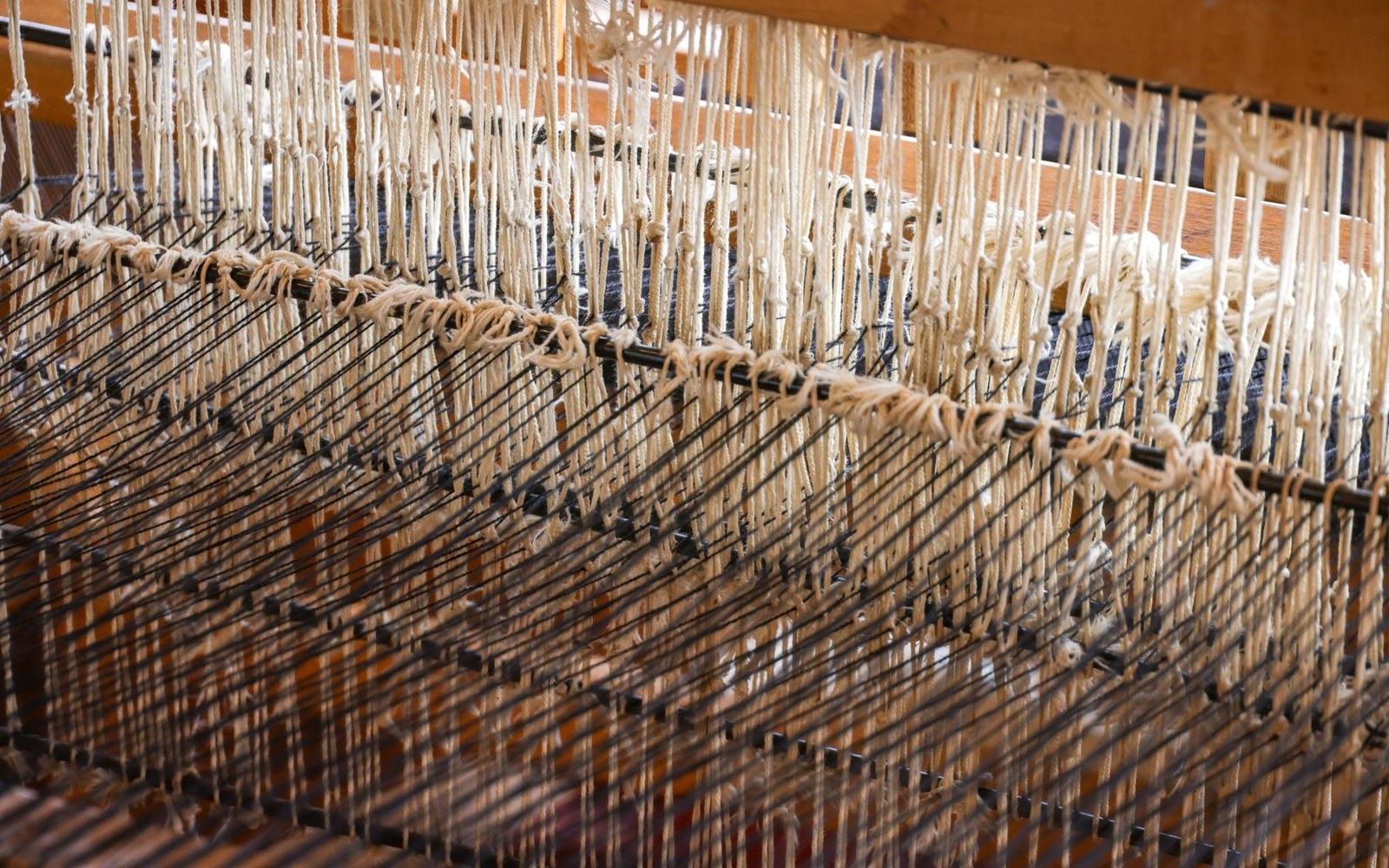
There is a subtler effect too. A weaver working horizontally by lamplight or open daylight loses the ability to step back from her work; she reads what she has made by bending close. A workshop weaver at a vertical frame can see the whole surface in one glance and correct a pattern error before it propagates across a dozen rows. The vertical loom is, among other things, a quality-control tool. The knot density and pile structure that distinguish a formal workshop carpet from a village piece reflect this difference in legibility as much as they reflect any difference in skill.