Water · Entry 02
Ab anbar
The domed cistern: stored water kept cold and still below ground, with wind-catchers drawing air across its surface.
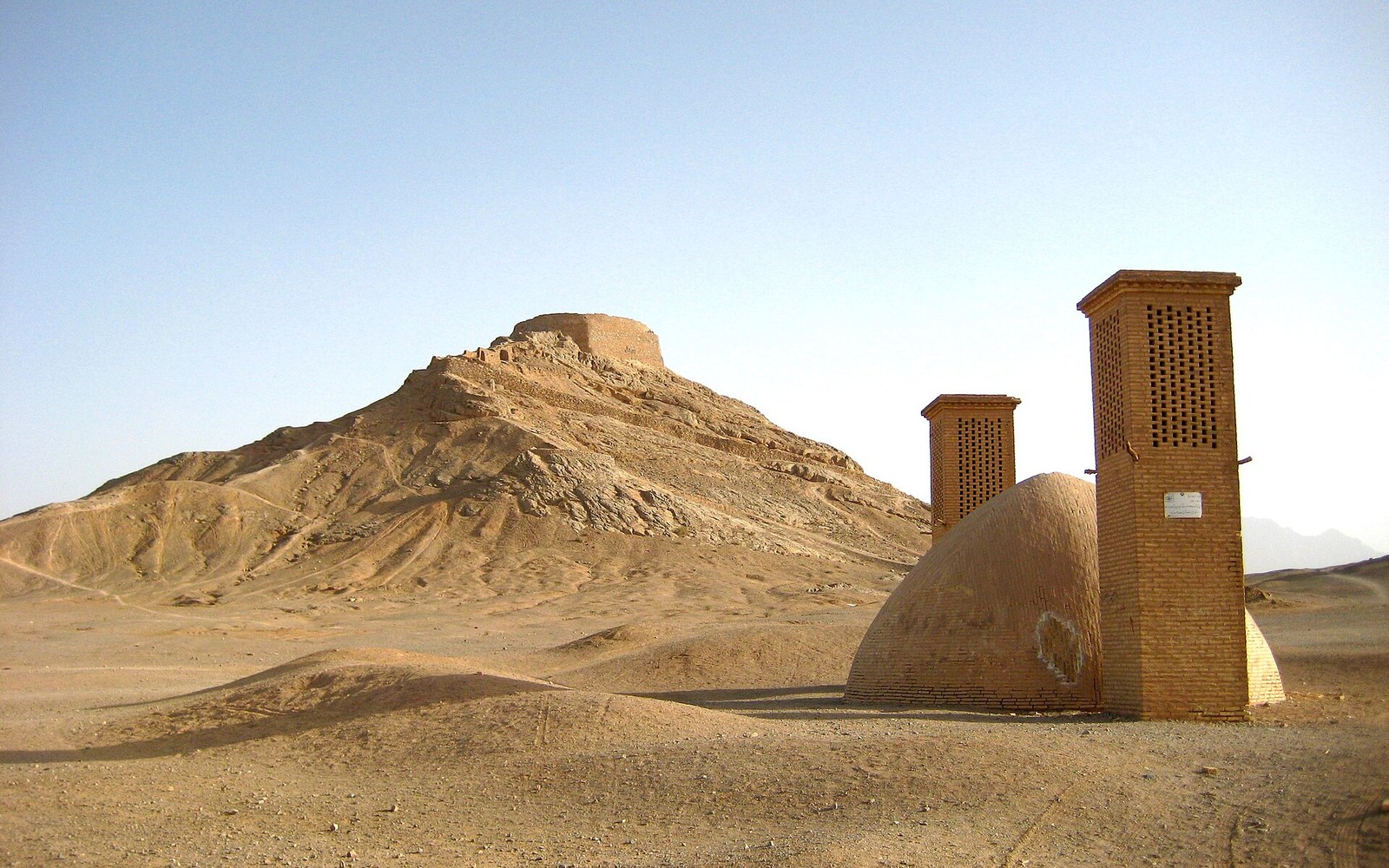
A cistern built to keep what the desert refuses to give
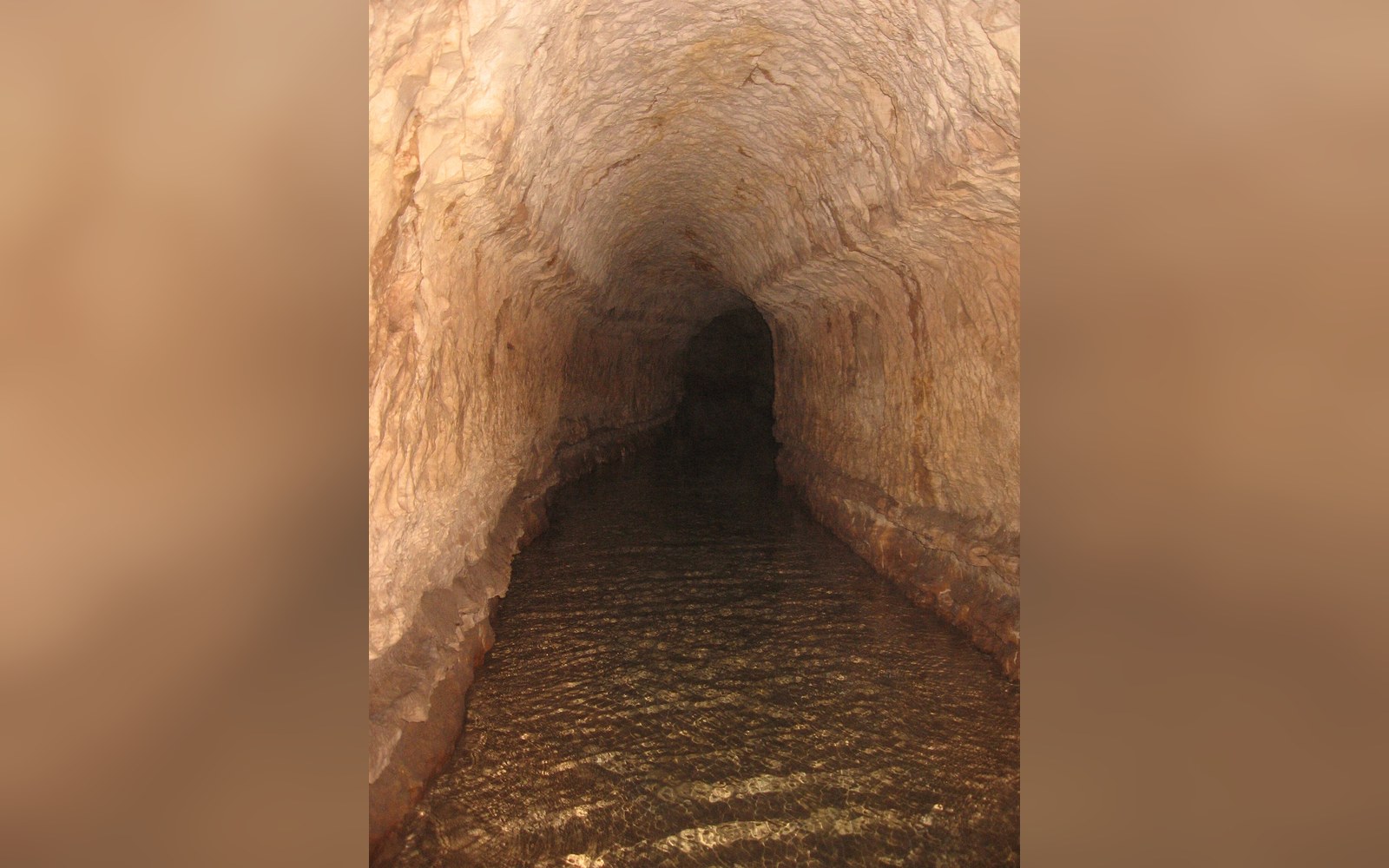
An ab anbar — literally "water store" — is a domed underground cistern, and it solved a problem that no canal or channel could: how to keep a large volume of water cold, still and uncontaminated across the weeks between one delivery and the next. Where a qanat gave a settlement its continuous trickle, the ab anbar gave it reserves — a buffer against the dry months when demand outpaced flow, or when dust and summer heat made surface water undrinkable.
A circular drum in brick — thick enough to resist the lateral pressure of both water inside and earth outside — carries a dome above.
The cistern sits mostly below grade. Its dome — typically a tall, slightly pointed form in brick — rises just enough above the surrounding earth to carry the wind-catchers and to shed any rain that fell. Everything else is buried, and burial is the point: a few metres of soil and masonry is one of the most effective insulating envelopes available without manufactured materials. Water stored deep in an ab anbar in the hot interior of Iran stayed substantially cooler than the air above, and in some configurations was cold enough to be useful well into summer.
Structure, air and the problem of still water
The plan is almost always circular or polygonal. A circular drum in brick — thick enough to resist the lateral pressure of both water inside and earth outside — carries a dome above. The base of the drum steps inward at the waterline, forming a ledge, and the floor slopes to a sump so sediment settles and can be drawn off separately from the main supply. Entry was by one or more steep staircases descending through the drum wall, with the lowest step reaching the waterline; users drew water from the bottom of the stair rather than the surface, which meant the disturbed, warmer surface layer stayed above the drawing point.
The wind-catcher — badgir in Persian — is where the ab anbar becomes more than a buried tank. A pair or quartet of badgir towers rises from the crown of the dome, oriented to the prevailing wind. One face catches the breeze and forces it down the shaft; the opposing face allows warm stale air to exhaust upward. The moving air crosses the water surface, accelerating evaporation, and evaporation extracts heat. The result is a continuous passive cooling cycle that requires nothing but wind and geometry to operate. Larger cisterns in Yazd and Kashan carried multiple wind-catchers arranged symmetrically, and their combined effect could hold interior temperatures far below ambient even during the months when daytime air temperatures reached extremes.
The dome itself does structural and thermal work simultaneously. Brick laid in a double shell, with an air gap, gave better insulation than a solid mass of the same material. The geometry — pointed rather than hemispherical — reduced the thrust at the haunches and allowed the walls below to be somewhat thinner, which also reduced the material conducting heat inward. Lime plaster on the interior surface, sometimes incorporating ash or other pozzolanic material, was hydraulic: it did not dissolve or slump in permanent contact with water, and its smooth, dense surface discouraged biological growth on the walls.
Scale, sitting and supply
An ab anbar serving a neighbourhood in a bazaar city was fed either by qanat branch channels diverted into it seasonally, or by surface runoff collected and directed from a wide catchment. The inlet was positioned high on the drum wall; the outlet, near the bottom, served a public tap or a small distribution chamber where users could fill vessels. In the larger examples of Yazd — a city where the ab anbar became something close to civic architecture — the stairwells were vaulted and the entrance facades given tilework and inscription, because the cistern was a public endowment, a waqf, and its patron wanted that fact known.
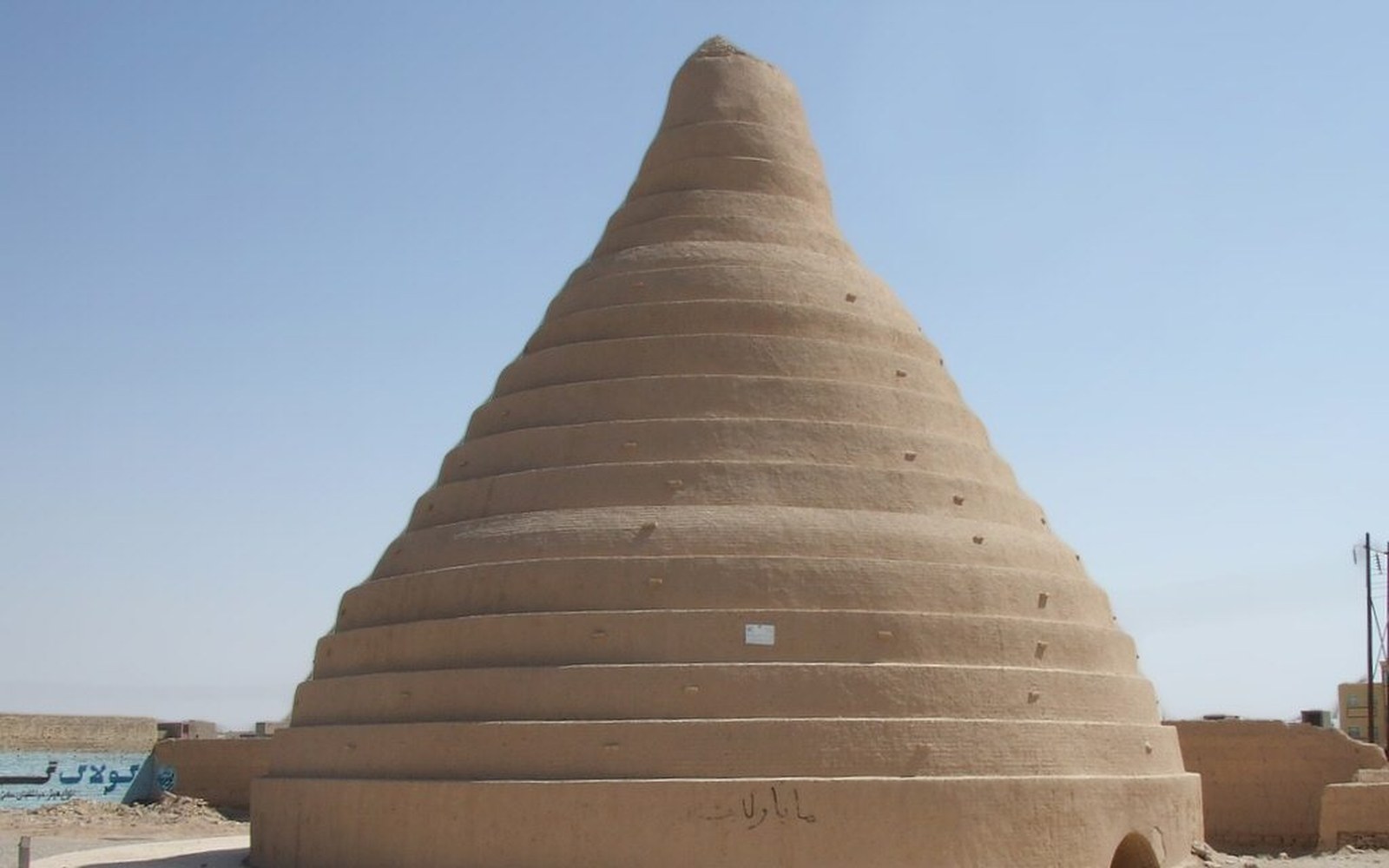
Smaller versions served caravanserais, roadside waypoints and individual estates. The form scaled without changing its logic: the dome stayed steep, the wind-catchers stayed oriented to the wind, the draw point stayed at depth. What varied was ornament, number of catchers and the sophistication of the inlet filtration — sometimes a simple grille, sometimes a settling basin upstream that removed suspended material before the water entered the store.
The ab anbar is not a sophisticated machine in any mechanical sense. It is a cavity shaped with enough precision to recruit two free resources — ground temperature and wind — and put them to work keeping water fit to drink.