Carpet · Entry 07
Regional pattern
A field layout and a border can place a carpet by region and workshop; what the vocabulary actually encodes.
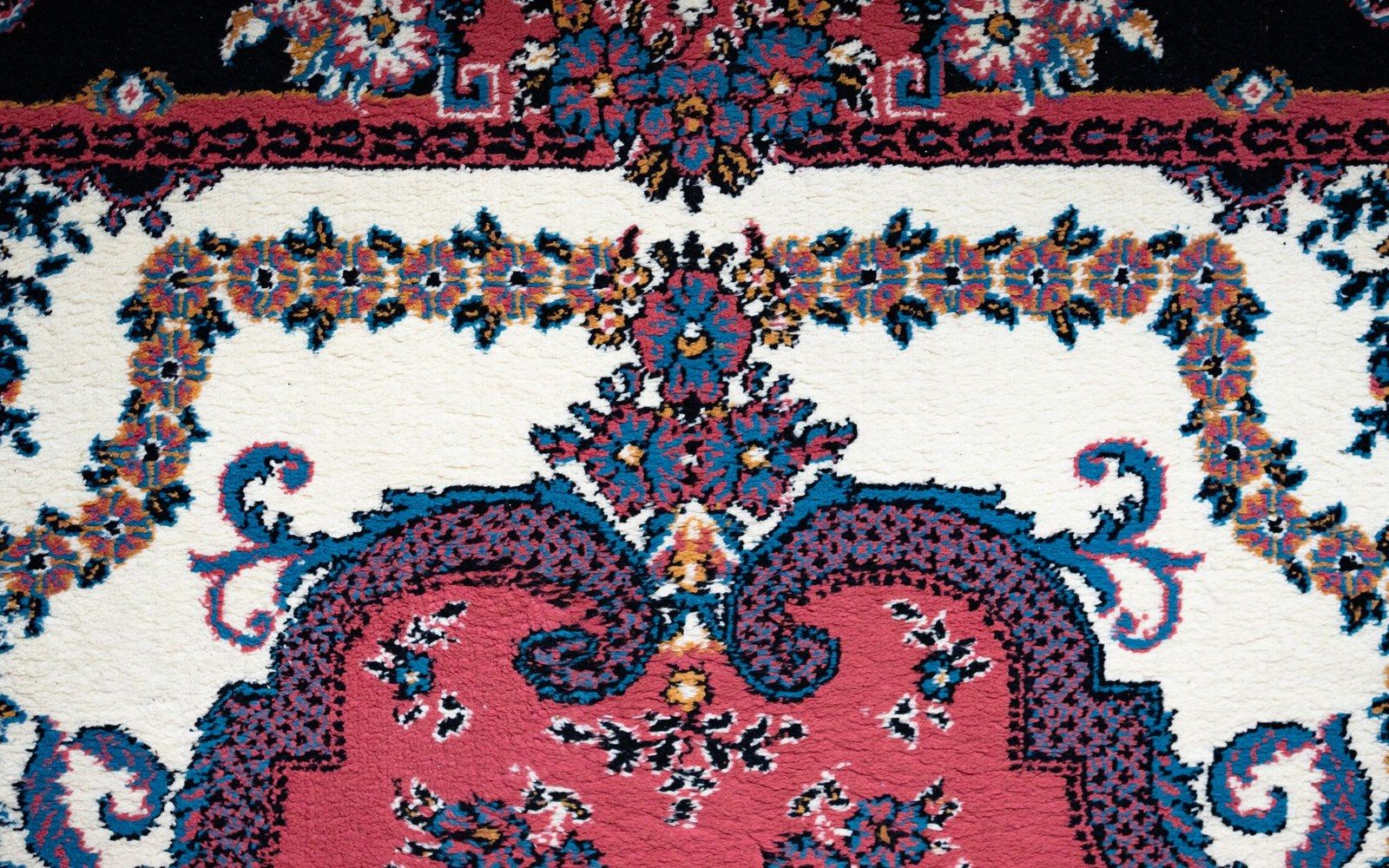
What the layout tells you before the knot count does
A carpet's field layout and border structure are not decoration applied after the fact — they are the primary record of where and how a piece was made. Read correctly, they locate a carpet more precisely than the pile alone.
The vocabulary is small but specific. The medallion format — a central dominant motif with quarter-repeats pressed into the corners — belongs overwhelmingly to the urban workshop tradition of Kashan, Isfahan, and Tabriz, where a master designer (naqqsheh) drew the cartoon on gridded paper and weavers reproduced it section by section. The repeating field (yekrast), by contrast, signals a village or tribal context, where the pattern was carried in memory and the hand, not on paper: Qashqa'i, Shahsavan, Kurdish weavers working a repeat they could sustain across a wide horizontal loom without a drawn guide. That difference in cognitive method — cartoon versus memory — is what the layout encodes.
A canonical Persian border runs three elements minimum: a main guard stripe, a minor flanking stripe, and a reciprocal outer guard.
Border structure is equally diagnostic. A canonical Persian border runs three elements minimum: a main guard stripe, a minor flanking stripe, and a reciprocal outer guard. The proportions of those three relative to the field are regionally consistent enough that the ratio alone — before any motif is read — points toward a production zone. Tabriz borders tend wide relative to the field; Khorasan borders lean narrower, with more field exposed. A Bijar piece carries borders so dense with interlocked palmette (herati) that the guard stripes read almost as additional fields in miniature.
The herati repeat itself — a rosette inside a diamond inside a lozenge of curved leaves — is the most geographically loaded motif in the vocabulary. It is associated with Khorasan production but was adopted so widely across northwest Iran and Kurdish weaving that its presence alone proves nothing: its execution proves everything. The leaf rendering, the tightness of the lozenge, whether the corner resolution is fully worked out or clipped — those details separate a workshop piece from a village piece that borrowed the format.
Borders also fail in revealing ways. A tribal weaver working a design transmitted through generations will frequently misread a classical scroll — abbreviating it, mirroring it incorrectly, or dropping a repeat without noticing. These are not errors in the pejorative sense. They are the knot-level evidence of a pattern moving outside the cartoon system, changing as it travels, and in that change encoding precisely the distance between the workshop and the loom it eventually reached.
Field and border, read together, are a document. The carpet is its own provenance.